 Discovery Bites
Wolves and People: A Gray Wolf Story for Kids
If you have done the Discovery Bites gray wolf unit, you know how a wolf family lives and talks. This page tells the wolf’s other story: the long story of wolves and people. It starts with a big question. Why did people once get rid of wolves, and why did they bring them back?
The first friends
Long ago, all people lived by hunting and gathering. So did wolves. Somewhere along the way, some wolves began living near people. Over many, many generations, those wolves changed. They became dogs.
Dogs were the first animals that people ever tamed, long before cows, sheep or horses. In 2020, scientists read the DNA of 27 ancient dogs. They found that by 11,000 years ago, there were already at least five different kinds of dogs in different parts of the world. Dogs traveled with people wherever they went.
So every dog you have ever met, from a tiny Chihuahua to a giant Great Dane, has a wolf in its family tree.
When people became afraid
As people began farming and raising sheep and cattle, things changed. A wolf that ate a sheep was now a problem. Old stories, like “Little Red Riding Hood” and “The Three Little Pigs,” made the wolf the bad guy.
In the United States, wolves once lived almost everywhere, from the cold Arctic down to Mexico. But people cleared the land where they lived and set out to kill them. By the early 1900s, wolves were gone from most of the country. Even Yellowstone, the first national park in the world, had no wolves left.
The wolves come home
Slowly, people began to see that wolves have a job in nature. In 1973, wolves in the Rocky Mountains were listed as an endangered species, which meant the law now protected them.
Then came a big plan. From 1995 to 1997, 41 wild wolves were caught in Canada and Montana, carried to Yellowstone in crates, and set free. Not everyone agreed it was a good idea.
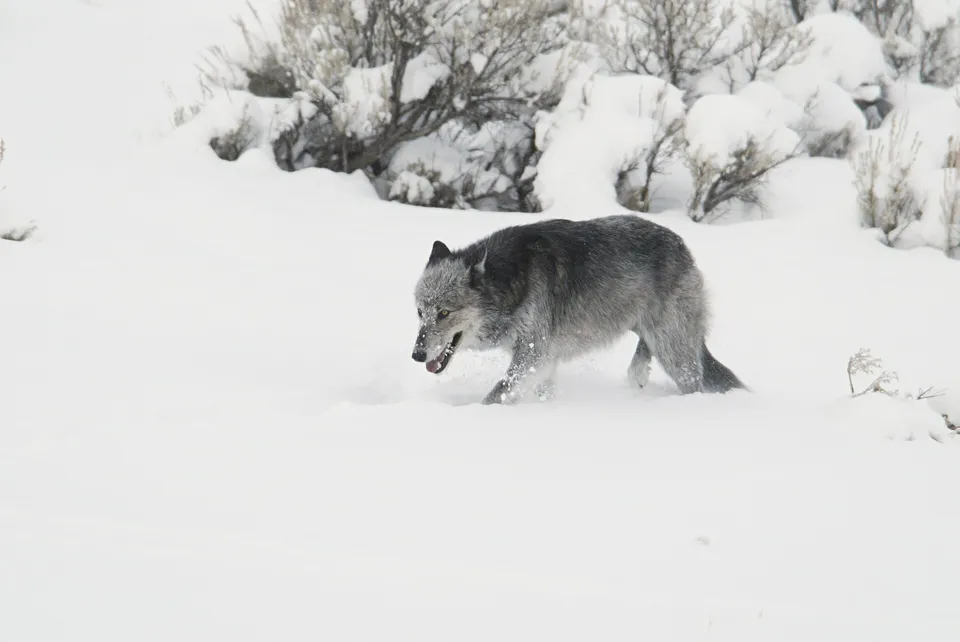
The wolves did well. They formed new packs and raised pups, and today they live all across the Yellowstone area. Other animals noticed too. When wolves bring down an elk, ravens and magpies arrive almost at once. Coyotes wait nearby. Bears try to chase the wolves off. Eagles and even tiny insects get a share. One wolf meal feeds a whole neighborhood.
Learning by watching
How do we know all this? Scientists watch, count and wait, sometimes for a very long time.
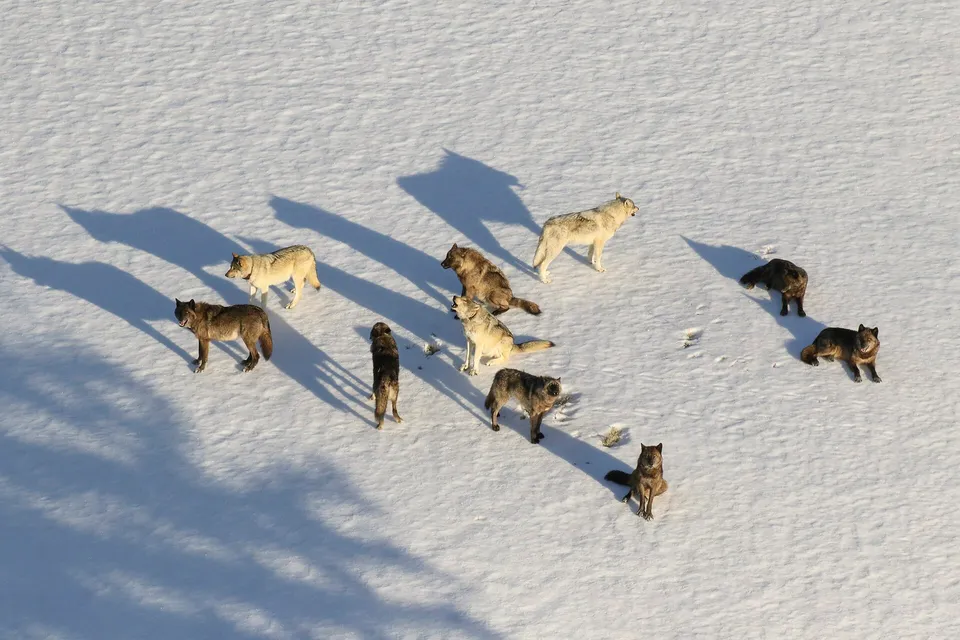
Isle Royale is an island in Lake Superior. In the cold winter of 1948, the lake froze, and wolves are believed to have walked across the ice from Canada. Moose already lived there. On the island, wolves eat almost nothing but moose, and moose have no other hunter. Scientists have counted both animals for more than sixty years. It is the longest study of a hunter and its prey anywhere in the world.
The study showed that a small, cut-off group can get into trouble. The island wolves were all related, and many became weak or sick. Between 2016 and 2018, only two were left. So people stepped in again and brought nineteen wolves from the Great Lakes region to the island.
For your family
- Tell it back: Ask your child to tell the story of wolves and people in four parts: friends, fear, return, and watching.
- Ages 6–7: Draw a dog and a wolf side by side. What is the same? What is different?
- Ages 9–10: On a map, find Yellowstone and the places the wolves came from. How far did they travel?
- Talk about it: Should wolves live near farms? What could help wolves and ranchers share the land?
Want to know how a wolf pack lives, hunts and calls to its family? That is what the Discovery Bites gray wolf unit is all about.
Sources
The facts on this page and in the Gray Wolf unit were checked against these sources on 2026-10-26.
- U.S. National Park Service — Wolves, Isle Royale National Park nps.gov
- Isle Royale Wolf-Moose Project — The Study isleroyalewolf.org
- Bergström et al. 2020 — Origins and genetic legacy of prehistoric dogs (Science, PubMed) pubmed.ncbi.nlm.nih.gov
- U.S. National Park Service — Yellowstone Wolf Facts nps.gov
- U.S. National Park Service — Wolf Ecology, Yellowstone nps.gov
- U.S. National Park Service — Why Wolves Howl nps.gov
- U.S. Fish & Wildlife Service — Gray wolf (Canis lupus) fws.gov
- International Wolf Center — How do wolves communicate? wolf.org
- International Wolf Center — Wolf FAQs wolf.org
- International Wolf Center — Wolf pup development wolf.org
- International Wolf Center — Wolf Families wolf.org
- IUCN Red List — Grey Wolf, Canis lupus (Boitani, Werhahn & Smith, 2026) doi.org
- Holiday House — Wolves by Gail Gibbons holidayhouse.com
- Explore.org — International Wolf Center Wolf Cam explore.org