 Discovery Bites
Axolotl Facts for Kids
If you have done the Discovery Bites axolotl unit, you already know how this salamander lives. This page is about the axolotl’s other story: the one told by people, from the Aztecs to today’s scientists.
A name from an old legend
The word axolotl (say it AK-suh-LOT-ul) comes from Nahuatl, the language of the Aztecs, also called the Mexica. Atl means “water.” Xolotl is the name of a god, so the name is often translated as “water twin.”
Xolotl was a god with the head of a dog. In one old story, written down by a Spanish friar named Bernardino de Sahagún in the 1500s, the gods had to give up their lives so the Sun could move. Xolotl did not want to. He ran and hid by changing shape. First he became a corn plant with two stalks. Then he became a maguey, a spiky plant. Last, he slipped into the water as a salamander, the one we still call the axolotl.
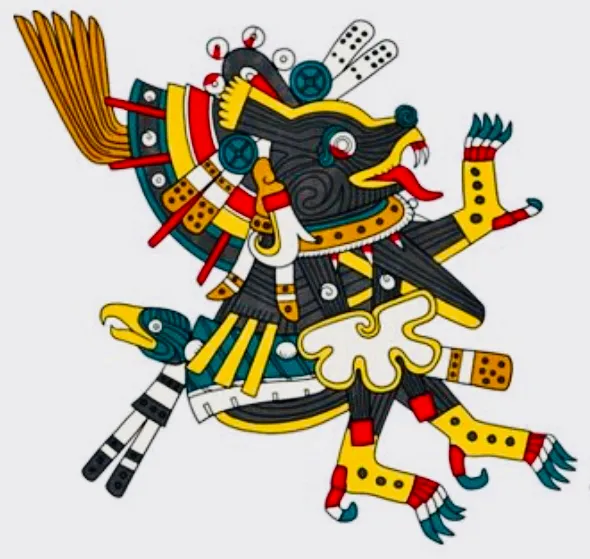
In the story he is caught in the end. But the shape he chose is still swimming in Mexico City.
Farm islands that are a world treasure
The Aztecs built their city on a lake. To grow food, they made chinampas: long garden plots built up from mud and plants, with canals all around them. Farmers in Xochimilco still grow vegetables and flowers this way.
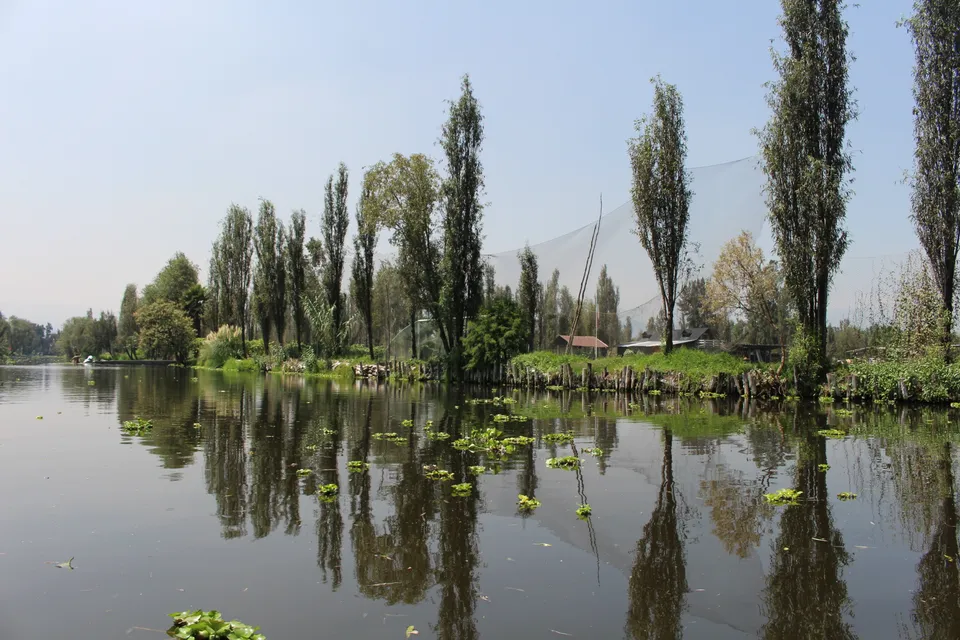
The canals and chinampas of Xochimilco are so important that UNESCO lists them, together with the old center of Mexico City, as a World Heritage Site. That means the whole world agrees they are worth protecting. And protecting them also protects the axolotl’s home.
On Mexico’s money
In 2021, Mexico’s central bank put a new 50-peso bill into people’s hands. One side shows the founding of Tenochtitlan, the Aztec city. The other side shows an axolotl, with corn, tall trees and chinampas behind it.
The bank asked axolotl experts for help, and the picture was based on an axolotl photographed at a museum in Xochimilco. Many people in Mexico now call it el billete del ajolote, “the axolotl bill.”
A giant instruction book
Every living thing carries a set of instructions, called its genome, inside its cells. In 2018, scientists finished reading the axolotl’s genome. It turned out to be about ten times longer than a human’s, one of the longest of any animal ever read.
Scientists now use that instruction book to look for the steps that let an axolotl rebuild its body. Many lab axolotls in the United States come from one place, a center at the University of Kentucky that raises them and sends them to schools and labs.
Talk about it as a family
- Xolotl hid as a plant, then a plant again, then an animal. What shape would you choose to hide?
- If your country put an animal on its money, which one should it be, and why?
- Why do you think protecting a farm can also protect a wild animal?
Sources
The facts on this page and in the "Water Monster" Axolotl unit were checked against these sources on 2026-10-26.
- World History Encyclopedia — Xolotl worldhistory.org
- UNESCO World Heritage — Historic Centre of Mexico City and Xochimilco whc.unesco.org
- Bloomberg Línea — Nuevo billete de 50 pesos: Tenochtitlan, el ajolote y otras características (2021) bloomberglinea.com
- Expansión — Así es el nuevo billete de 50 pesos de Banxico (2021) expansion.mx
- Nowoshilow et al. 2018 — The axolotl genome and the evolution of key tissue formation regulators (Nature) nature.com
- University of Kentucky — Ambystoma Genetic Stock Center ambystoma.uky.edu
- National Geographic — Axolotl nationalgeographic.com
- IUCN Red List — Axolotl, Ambystoma mexicanum (2019) iucnredlist.org